
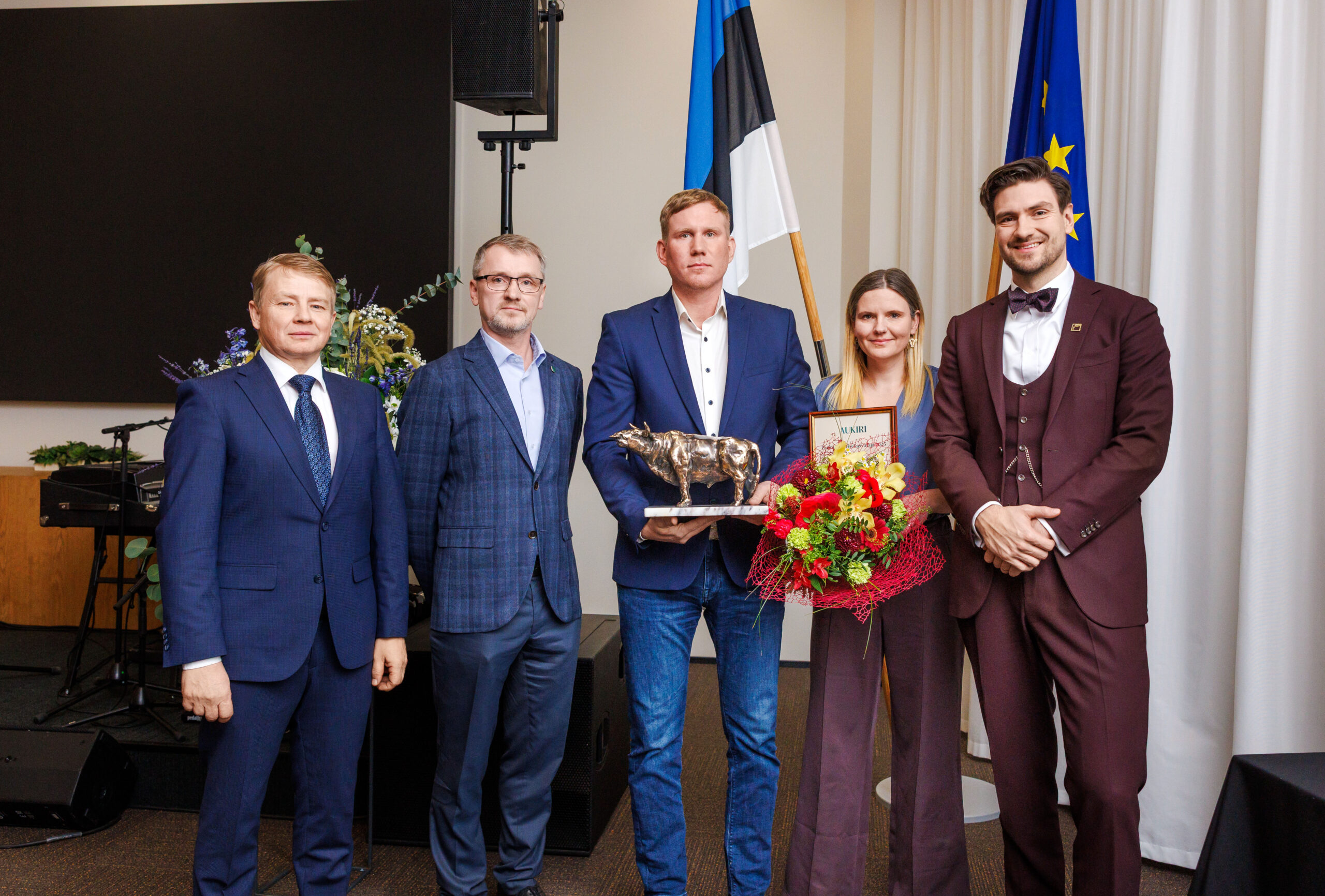
“The best beef cattle breeder 2025”
Lisanna and Marko Hiiemäe, who received recognition from the Estonian Breeders Association and the Rural Development Foundation, emphasize that the title of “Beef Cattle Farmer of the Year” has been built on continuous self-improvement and learning. “We must not forget that technology and the world are changing rapidly, and relying on old knowledge is not an option,” they affirm.

Sepa Farm`s family has proven over ten years that knowledge-based actions, perseverance, and innovation are the foundation of the future of beef cattle farming. When asked how they see the current situation of Estonia’s beef sector, they say it is at a strategic crossroads, where conflicting trends intertwine. “On one hand, the number of producers and cattle has decreased, raising questions about the sector’s sustainability. On the other hand, societal expectations for local food, supply security, and rural vitality are growing, giving beef producers an increasingly clear role,” they describe the processes.
In their view, a beef breeder is not just a producer but a carrier of regional economy and food security, whose work extends beyond farm boundaries. In such a situation, finding one’s place should not be a matter of survival but a conscious choice to invest in quality, sustainability, and long-term partnerships. They emphasize that if national policies support investments, the next generation of young farmers, and a fairer distribution of value in the supply chain, the sector has a very clear future. “Estonian beef breeders have their place — the question is only how much society values local production and whether we can create a stable environment for its development,” they conclude.
Quality First
Marko and Lisanna Hiiemäe’s journey into beef cattle breeding was not planned but started from a casual interest that grew into a deep quest for understanding. They have learned both through training and from the experiences of other breeders, as Estonian beef farming relies heavily on community knowledge exchange. According to them, the best practices are shared through open communication and shared learning among breeders. Standing still has never been an option for them — each year brings new knowledge, surprises, and the need to adapt. They say they are mainly inspired by passion for animals and nature, a desire to create new solutions, and contribute to the local economy. These attitudes keep their motivation alive to offer quality, sustainable, and local food, shaping the development of Sepa Farm. In this context, Marko Hiiemäe’s practical experience in Liivimaa Beef’s production side is also crucial, as he deals daily with meat processing, quality control, and production challenges. His work gives him an immediate understanding of market needs, required cuts, how production cycles affect quality, and the bottlenecks along the value chain from livestock to retail. This experience helps them to make farm decisions that consider the entire meat journey, not just herd management. It’s also one reason their products are valued by consumers and on Liivimaa Beef’s production line, where many nuances determine the outcome. Quality meat is not an accident but a systematic effort starting from a conscious owner. Good genetics, well-thought-out housing conditions, stress-free environment, and quality feed are their four pillars that determine animal development and final meat quality. When these are in place, quality follows. However, they remind that the world is changing rapidly, and relying on old knowledge is no longer viable. “Those who do not learn today will be left behind,” says Marko Hiiemäe, emphasizing that beef cattle farming is a field where continuous development is inevitable. This principle has guided the development of Sepa Veised — from herd management to the use of technological solutions. Marko’s experience in a production company also provides a clear picture of how farm decisions influence the later stages of meat processing.
Wagyu as a conscious strategy
When the first animals arrived at Sepa Farm in 2016, they did not yet have a clear vision of where they wanted to go. However, over ten years, they have gained knowledge and experience that have shaped their company into one of Estonia’s distinctive beef producers. Today, the family manages nearly 400 hectares in Tori Parish and raises one of the largest Japanese Wagyu cattle herds in Estonia. The Wagyu choice was not accidental but based on the understanding that they do not want to produce volume but quality. “When we eat ourselves, we want to eat well. Wagyu beef is authentic, marbled, tasty, and suits our land and climate,” says Marko. For them, quality is a holistic concept that includes genetics, feed, grazing systems, and calm handling of animals. Wagyu cultivation has also given them deeper insights into how small nuances affect marbling, texture, flavor profile, and how a production company should handle such meat to avoid losing its potential.
Grasslands Showing Change
An important part of their work is rotational grazing and restoring grasslands. They apply regenerative agriculture principles that support soil biodiversity and grassland resilience. Over the years, they have seen clear changes on their pastures: increased plant diversity, stronger grasslands, and a positive response from nature. “We do not do everything exactly as the book says, but we see how nature comes alive. It’s not a coincidence,” says Marko. For them, organic farming is not just a certification but genuine animal welfare and honest production, creating a trustworthy and sustainable system. Restoring grasslands is also crucial from a production perspective, as high-quality feed directly influences meat flavor, fat composition, and marbling. Marko’s experience in Liivimaa Beef confirms daily that animal welfare and feed quality are reflected in the final product — and this knowledge has shaped their farm decisions more than they initially imagined.
Recognitions Confirming Their Path
Sepa Veised has received several awards, including “Best Farm in Estonia 2023,” the Tori Parish Year’s Company, and “Breeder of the Year 2025.” Their work has been recognized for both environmentally conscious management and sector development.
Hiiemäed was also nominated for the Farmer of the Year 2025, confirming their consistent contribution to Estonian agriculture. Although Sepa Farm has been visible during Open Farm Days and other events, community involvement is not an end in itself but a natural part of sustainable farming. Their focus remains primarily on animals, land, and quality production — all vital for a strong, sustainable agricultural foundation.
According to them, the title of Beef Cattle Farmer of the Year certifies they are on the right track. “It symbolizes dedication, experience, and vision built over years. The recognition also sends a message that Estonian beef farming is not just a business but a long-term mission — to produce quality meat, preserve nature, and ensure that everything we leave behind is stronger and richer,” they say.They also add that it’s a positive sign for consumers: locally raised meat is highly valued, and behind it stands a trustworthy, quality-oriented producer.
Tanel Taavi Bulitko, Chairman of the Board of ETKY, says Lisannas and Markos recognition is a good sign that their consistent and meaningful contribution is acknowledged more broadly in the sector. “Sepa Farm is not just a successful enterprise but one of those farms that demonstrate how knowledge-based approaches, quality focus, and regenerative agriculture can shape the future of beef cattle farming,” he notes.
Text: Juuli Nemvalts
Photo: Ralu Mee